
Ford 7.3L PowerStroke Engine Repair
Maintenance, Inspection, Diagnostics, and Repair
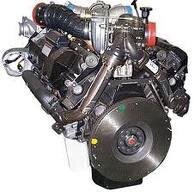
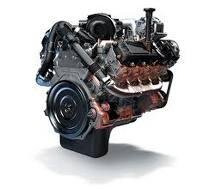
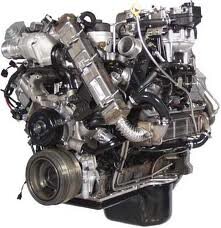
Ford 7.3L PowerStroke engine maintenance, inspection, diagnostics, and repair.
7.3 liter Power Stroke Engine
7.3 Powerstroke
The first 7.3L was produced from 1988-1993. The original 7.3L diesel was a non-turbo charged indirect injection (IDI) engine, followed shortly after by a turbo charged version. It was very similar to the previous 6.9l IDI diesel engine, which was simply bored out for more torque. This engine is not considered in the powerstroke family. In 1994, the 7.3L underwent some changes. The 7.3L was changed to a direct injection (DI) engine from the original IDI engine.
Ford also added electronic fuel injectors and gave it the name Power Stroke. This model produced up to 250 hp (190 kW) and 525 lb·ft (712 N·m) of torque. The new 7.3L DI Power stroke had "single shot" HEUI (hydraulic electronic unit injectors) fuel injectors and ran a 15º high pressure oil pump (HPOP) to create fuel injection pressures. The turbine housing was a 1.15 A/R. In 1999, an air to air intercooler was added. The intercooler cooled the charged air from the turbo making it denser. The cooler, denser air would increase the horsepower potential of the engine, while also reducing exhaust gas temperatures (EGTs). The turbine housing was changed to a .84 A/R housing and a wastegate was added.
The "single shot" HEUI injectors were upgraded to "split shot" injectors. With larger injectors, the HPOP was advanced to 17º to increase fuel pressures. The 7.3L DI Power Stroke was in production up until 2004 when it was replaced by the 6.0L. The 7.3 IDI and 7.3 Powerstroke are not the same engine at all except manufactured by International for Ford.
This is known to be the longest lasting and most reliable powerstroke engine.
Common 7.3L Issues and Repairs
IPR Valve
The IPR VALVE is located in the valley on the HPOP. These often stick, sensors go bad or the wires can corrode or get cut.
Replacement required.
IDM (Injector Driver Module)
IDM located on drivers side fender can go bad and will cause a no-start or rough running and cut outs in revving/rpm.
Replacement required.
Bad CPS Sensor
Bad CPS sensor causes the engine to cut out and eventually stop running. The engine will not start until it sits for extended period or is reset by disconnecting batteries for a period of time.
Requires replacement when bad. We use OEM as aftermarket CPS sensors can be defective out of the box.
Bad UVCH Connectors
These can ground out on your glow plugs, causing rough running conditions, resulting in a rocking motion of the truck and will often sputter and die. There are four connectors on your block/heads located under the valve covers.
Physically inspect them by unplugging and check for cut wires or burned connectors. If there is any damage, replacement is necessary.
Clogged Fuel Filter
Clogged fuel filter will often cause long cranking or slight loss in power, since the injectors can't get the fuel they need to keep the engine running properly.
Replacing fuel filter is routine maintenance and can save you aggravation, time and money.
Lift Pump Failure
Lift pump failure will cause a no-start situation. If the lift pump is inspected and determined to be the cause of no-start, replacement is necessary.
Engine Overheating
Engine overheating can be caused by bad radiator, bad thermostat, bad water pump, or bad coolant.
Bad ICP Sensor
A bad ICP sensor will cause the engine to cut in and out, often stops running altogether and may not restart.
Diagnosis and replacement is necessary if found to be bad.
Additional Common Issues
Climate Control Hissing
Hissing from the dash when on "Max A/C" or "Defrost" selection is made on the Climate Control Selector. Open the hood and look to the back left (as you are looking at the motor) of the Engine Bay. Near the firewall and right fender there is a vent blending door actuated by a white (factory) 1/8" vacuum line.
Fix: Inspect for dry/cracking/broken vacuum line and replace. Hissing under the dash will go away.
Fuel Heater
Fuel heater shorts out and blows maxifuse #22, disabling the PCM. Disconnect the fuel heater, replace fuse, re-try start.
Glow Plugs
Usual tests for GP relay function, UVCH continuity, resistance of the glow plugs.
Replacement cost depends on what's found to be defective.
Block Heater
Usually it's just the cord, not the heater itself. Test with an ohmmeter / continuity tester.
Coolant SCA Maintenance (CRITICAL)
SCA degradation results eventually in cavitation.
Repair cost - you don't want to know (engine replacement)
Prevention:
- $20-ish for a bottle of SCA and some test strips if coolant is still fresh
- $100+ for complete coolant flush
Clutch Linkage/Hydraulics Issues
Weak hydraulics, or worn pedal box bushings, or worn lever arm / eyelet bushing. Extreme eyelet bushing wear can lead to the eyelet expanding (ovalizing).
Repair/Replacement costs:
- $120-150 for the hydraulics (complete pre-bled system)
- $20 for the pedal box bushings (dealer)
- $5 for the "cheap" arm/eyelet bushing repair (brass tubing + drill stop collar)
- $20 for the "fancy" arm/eyelet bushing repair
Why the 7.3L is "The Good"
Strengths:
- Longest lasting Powerstroke engine
- Most reliable Powerstroke design
- Simple, proven technology
- Easier to diagnose and repair
- Lower repair costs overall
Common Maintenance:
- •Regular fuel filter changes
- •Coolant SCA testing and maintenance
- •Sensor inspections (CPS, ICP, IPR)
- •UVCH connector checks
- •Glow plug system maintenance
Expert 7.3L Powerstroke Service
Keep your reliable 7.3L running strong with professional maintenance and repair
Call (248) 478-838224175 Industrial Park Dr., Farmington Hills, MI 48335
